A “magic pill” for fat loss would be something cheap and easy that changes how much you eat without much effort. The supplement shelf promises that, and the research on it is thin. Two everyday habits have been tested in randomised trials, though, and the results are worth reading closely: going to bed earlier, and drinking water before meals. Neither is sold as a supplement, and neither result is huge, but both trials measured weight directly.
What the supplement research found
A 2021 systematic review by Batsis and colleagues (PubMed 34159755) looked at 315 randomised controlled trials of 14 supplements and alternative therapies sold for weight loss. Only 52 were classed as low risk of bias and sufficient to support efficacy. Of those, 16 showed a significant difference in weight between groups, ranging from 0.3 to 4.93 kg. The authors conclude that these products have a limited high-quality evidence base, and note that they are sold as a panacea because of minimal regulatory requirements to show they work.
That sets a fair bar for any “pill” that is not a pill.
An extra hour in bed
At the University of Chicago, Tasali and colleagues ran a randomised trial with 80 adults aged 21 to 40 who were overweight and usually slept less than 6.5 hours a night (PubMed 35129580). After two weeks of normal sleep, half had a personalised counselling session on sleep habits, aimed at extending their time in bed to 8.5 hours, and followed the advice at home for two weeks, with a check-in visit partway through. The other half carried on as before. Nobody was given a diet or an exercise plan.
The sleep group slept about 1.2 hours more per night. Their energy intake, worked out from measured energy use and changes in body stores rather than from food diaries, fell by 270 kcal a day compared with the control group. Energy spent did not differ significantly between the groups.
In the full paper (PMC8822469), the sleep group’s weight held roughly steady over the two intervention weeks (−0.03 kg) while the control group’s rose by 0.35 kg; measured against each group’s own baseline fortnight, the difference between the groups was 0.87 kg. The authors write that limiting the use of electronic devices appeared to be a key part of what the participants changed. They also note two limits: the study did not show how long the new sleep habits could be kept up, and the control group’s own rise in intake and weight may have added to the gap.
Half a litre of water before each meal
At Virginia Tech, Dennis and colleagues randomly assigned 48 adults aged 55 to 75 to one of two groups for 12 weeks (PubMed 19661958; full text PMC2859815). Everyone was on a reduced-calorie diet. One group also drank 500 ml of water before each main meal. Weight loss was about 2 kg greater with the preload. Put another way, the decline in weight over the 12 weeks was 44% greater than in the diet-only group.
The detail worth noticing is in the test meals. At the start, people ate less at a meal after a 500 ml water preload than without one (498 against 541 kcal). By week 12 that gap had narrowed to 480 against 506 kcal and was no longer statistically significant. The authors suggest the extra loss may be due in part to that short-term drop in meal intake.
The NHS weight-loss tips include swapping sugary drinks for water, with slices of lemon or lime if you do not like the taste. Its fluids page gives the Eatwell Guide figure of 6 to 8 cups or glasses of fluid a day.
Keeping the pace realistic
The same NHS tips page suggests aiming to lose 0.5 to 1 kg a week, and warns against losing weight suddenly with diets or skipping meals, since you might end up snacking more. Against that pace, the sleep trial’s 0.87 kg between-group difference over two weeks and the water trial’s 2 kg over twelve are modest, and neither involved buying a product beyond the bottled water the Virginia Tech team handed out.
Where dates fit on the plate
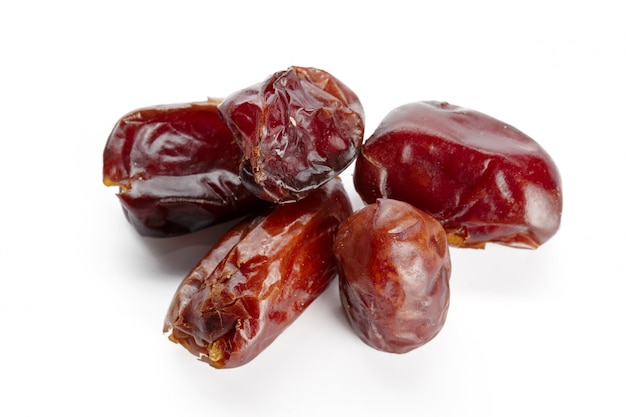
The NHS counts a 30g portion of dried fruit, naming currants, dates, sultanas and figs, as 1 of your 5 A Day, but says it should be eaten at mealtimes, not as a snack between meals, to reduce the impact on teeth. USDA FoodData Central lists Deglet Noor dates (FDC 171726) at 282 kcal and 8.0g fibre per 100g, so a 30g portion is about 85 kcal and 2.4g fibre. One pitted Deglet Noor date is listed at 7.1g, or about 20 kcal.
On the NHS advice, then, dates go with a meal, next to the glass of water, rather than being picked at between meals. At 282 kcal per 100g, the 30g portion is a more useful measure than a handful.
About this site and how to reach it
The about page describes the site as a date supplier serving retail and wholesale buyers, with delivery across Malaysia and customer service on WhatsApp. Questions on quotes, stock availability or delivery can go through the form or WhatsApp on the contact page, and other date articles are on the blog. A link kept from the earlier version of this post points to Pembekal Kurma Selangor .
This article is general information about diet research, not personal advice. If you have a health condition or take regular medication, speak to your doctor before changing how you eat or sleep.